Context
Cotecna is an inspection and certification company with 5,000+ employees worldwide. In 2020, in the middle of a digital transformation, it moved software development in-house and built its own engineering teams. The change was led by engineering and business, and design maturity was zero. That is where I came in, as the company's first designer.
The challenge was twofold:
- Immediate: be the only designer supporting three Agile squads and 9+ products, with teams split between Spain and India, fully remote (it was Covid), and almost no experience of working with a designer.
- Long term: show that design is fundamental to how products are created, and prove the value it brings.
There was a catch. All our products are internal tools or custom-built for clients, so the usual design metrics (conversion, funnels, feedback at scale) were useless here. My objective became a different one: prove that design makes product management and development work better.
Five years on, user-centered design is a key part of how products are conceived, built and validated, with a UX team supporting 15+ products and 50+ people across five product squads and one innovation team, with stakeholders in more than eight countries.
The Process
Design was understood as the act of drawing screens. My first assignment was literally to fix a complete web app developed without any design, including implementing the changes in code myself. As all of them were internal products, the only premise for implementation was to make it fast and cheap, with no care at all about the experience or even about solving the right problems. There was no design material, no system and no precedent, so earning the right to do the work came before any methodology.
1. Earning trust by being useful. Prototyping as the primary design tool
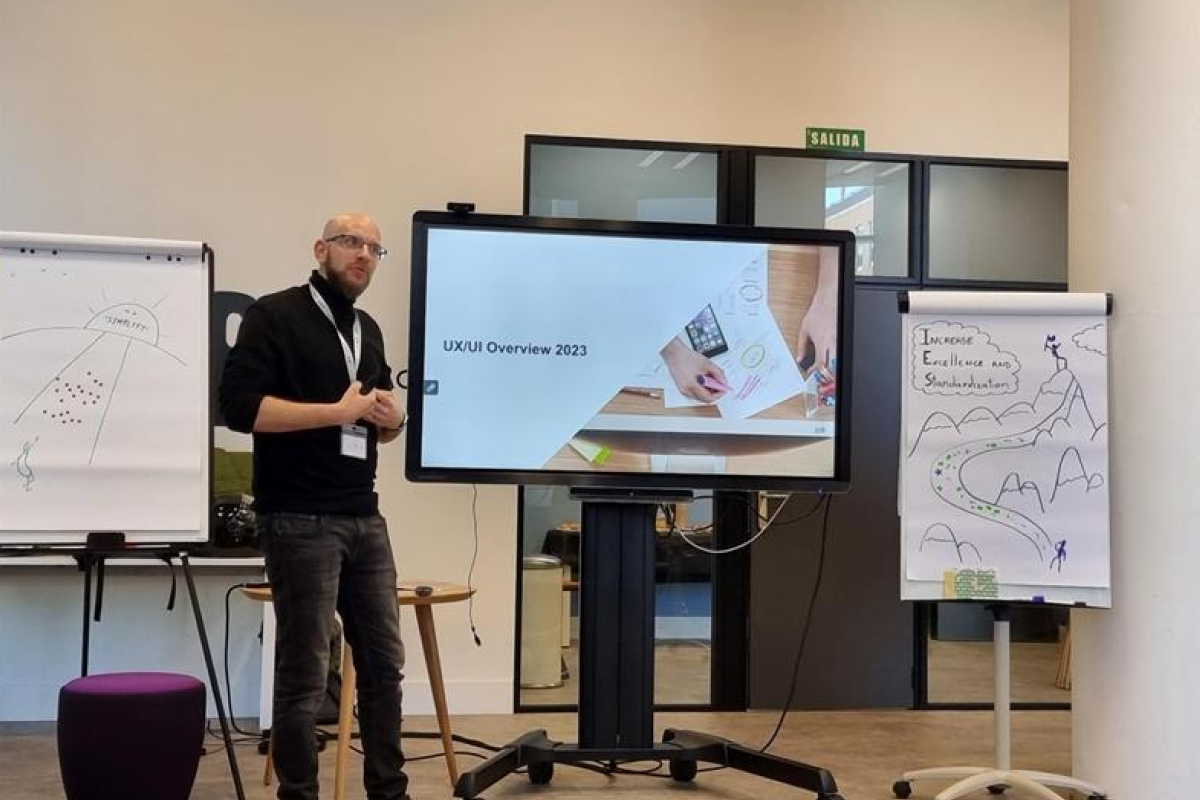
Instead of a radical change, I chose a gradual improvement. My first priority was to become genuinely useful to teams. Collaborating with dev teams was easy, being helpful with their layout tasks, simplifying work and adapting designs to their frameworks. More complex was convincing Product Managers, used to working alone on most of their tasks. I convinced them by taking requirements efficiently and delivering prototypes and assets quickly.
I set up Figma as the primary design tool and made interactive prototypes mandatory on any front-end backlog item before grooming. There was friction at first with teams used to building UI without constraints or design QA; the first adapted UI Kit is what turned that into a shared way of working.
Over these years I have designed end-to-end, or collaborated on the evolution of, 12 enterprise products (6 end-to-end, 6 in close collaboration), including:
- Laboratory Information Management Systems (LIMS), SaaS for laboratories
- Web apps for certification processes, including the Customer Portal to handle requests and the web application to generate and issue the certifications.
- Cotecna Eye, a mobile app and web platform to configure and carry out inspections
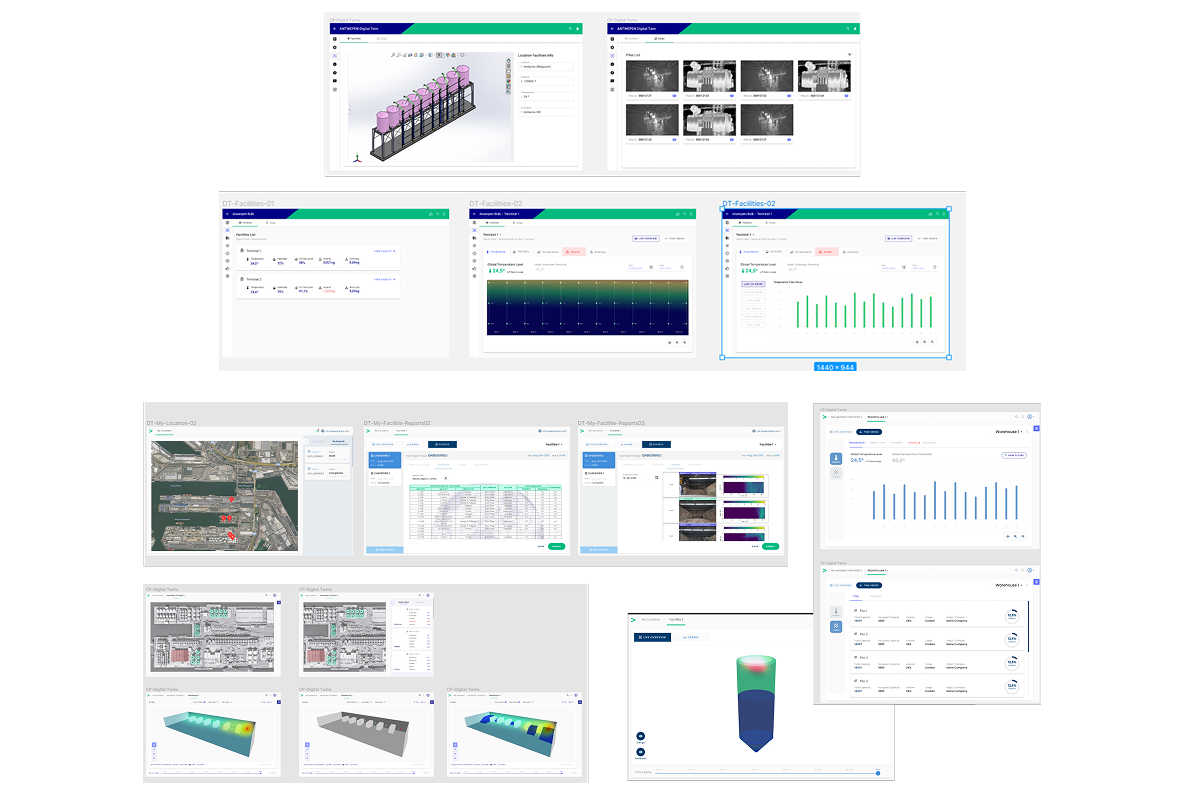
- Digital-twin management platform for silos and warehouses based on drone measurements
2. Bringing user research into discovery
Once design and prototyping were trusted, I moved upstream into the Discovery stages, where design had been absent. Until then product managers acted mainly as intermediaries between business and development, and users were contacted only when reporting issues.
- Ran the first user interviews, sat with real users, visited the laboratories and looked at market solutions.
- Improved how feedback was captured, adding in-product surveys and suggestion forms, and reshaping employee satisfaction surveys so they gathered useful insight rather than borrowing marketing-style scoring.
This was not formal research with a textbook methodology, and I have never presented it as such. The value was in introducing pragmatic discovery and validation into an organization that simply did not do it.
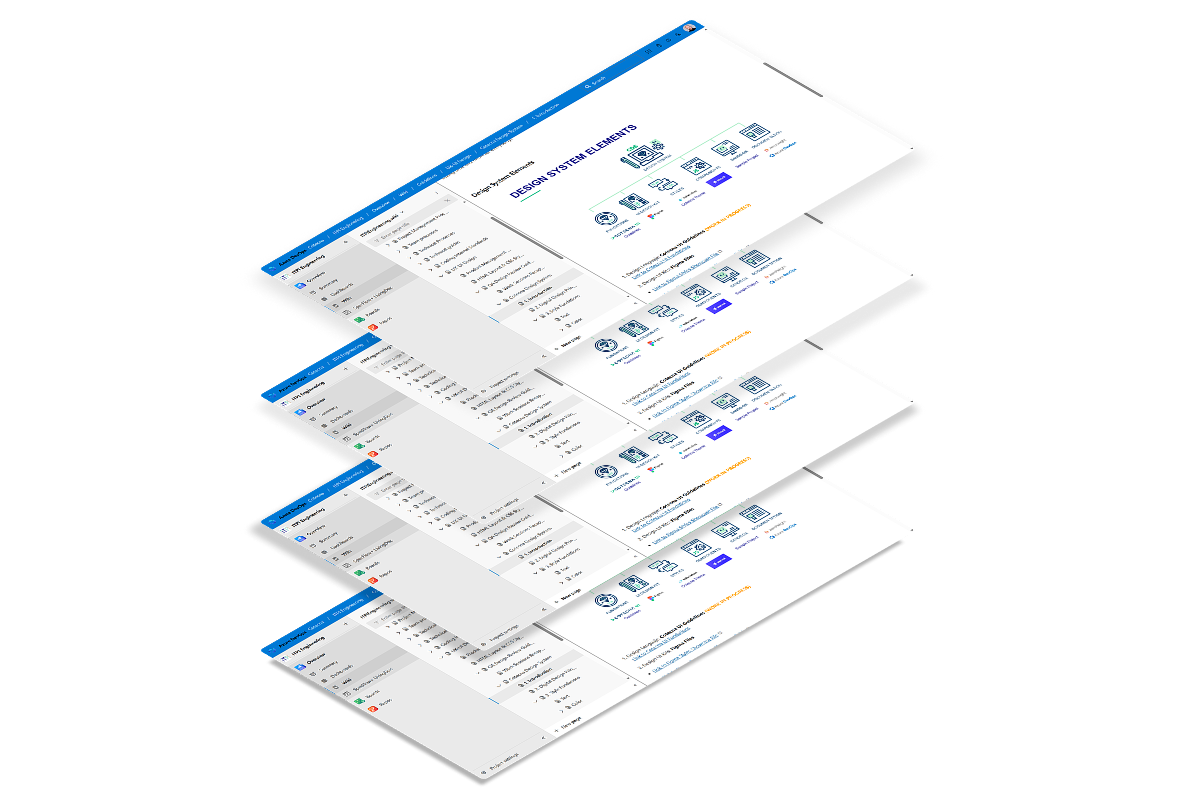
3. A design system by adapting existing libraries
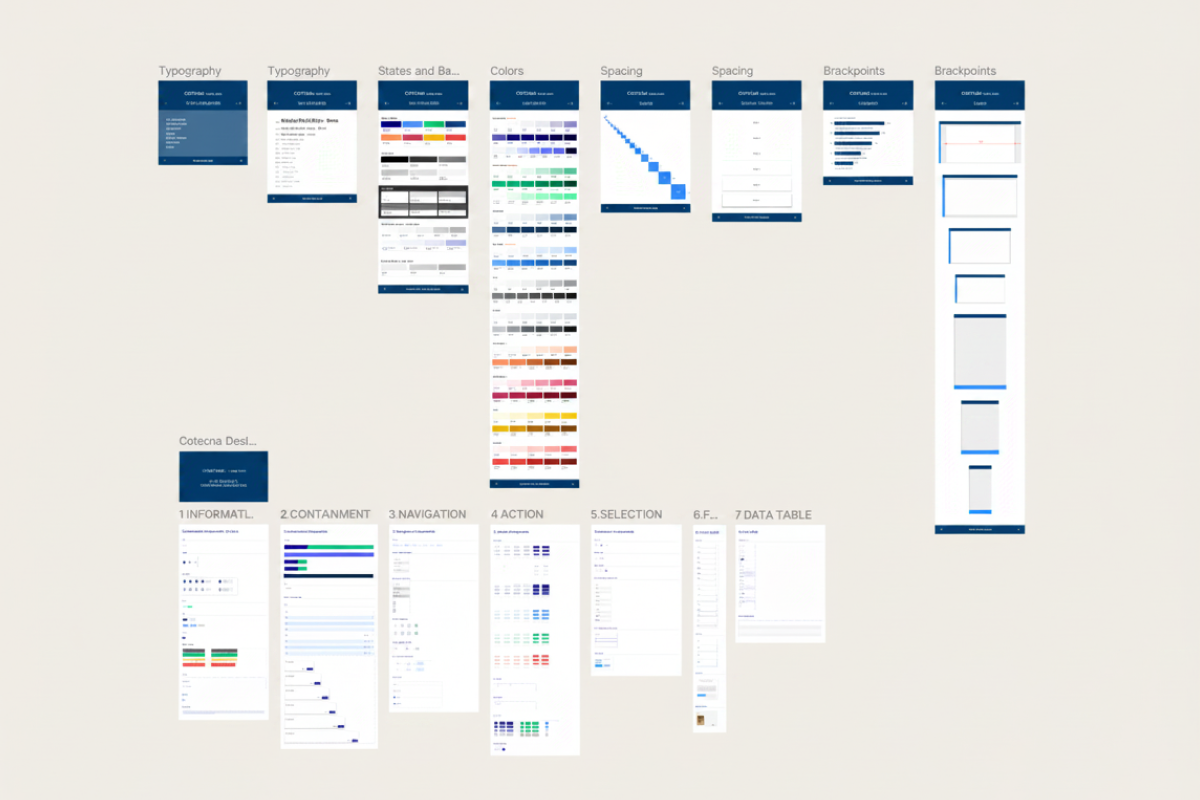
Our teams built on a common technology base (.NET and Angular) but with no shared criteria for components, let alone design. Products were inconsistent and inefficient to maintain and scale. A single Cotecna design system was the obvious answer, but after several demos and proofs of concept, building one from scratch was ruled out on cost.
So I adapted existing libraries instead: Angular Material, PrimeNG, Kendo UI and Flutter, depending on the project. For each one I had to understand how the library actually worked, at the level of its documentation and code rather than only its visuals, and then adapt its UI Kit into reusable components aligned with Cotecna's identity, with a matching Figma kit so design and development spoke the same language.
This also reflects how I work: I design within the constraints of the libraries the teams use, so what I hand over can be built by developers who are not front-end specialists. The design is made to be built. Today, 8 of Cotecna's 15+ products build on this adapted system.
4. Scaling the practice
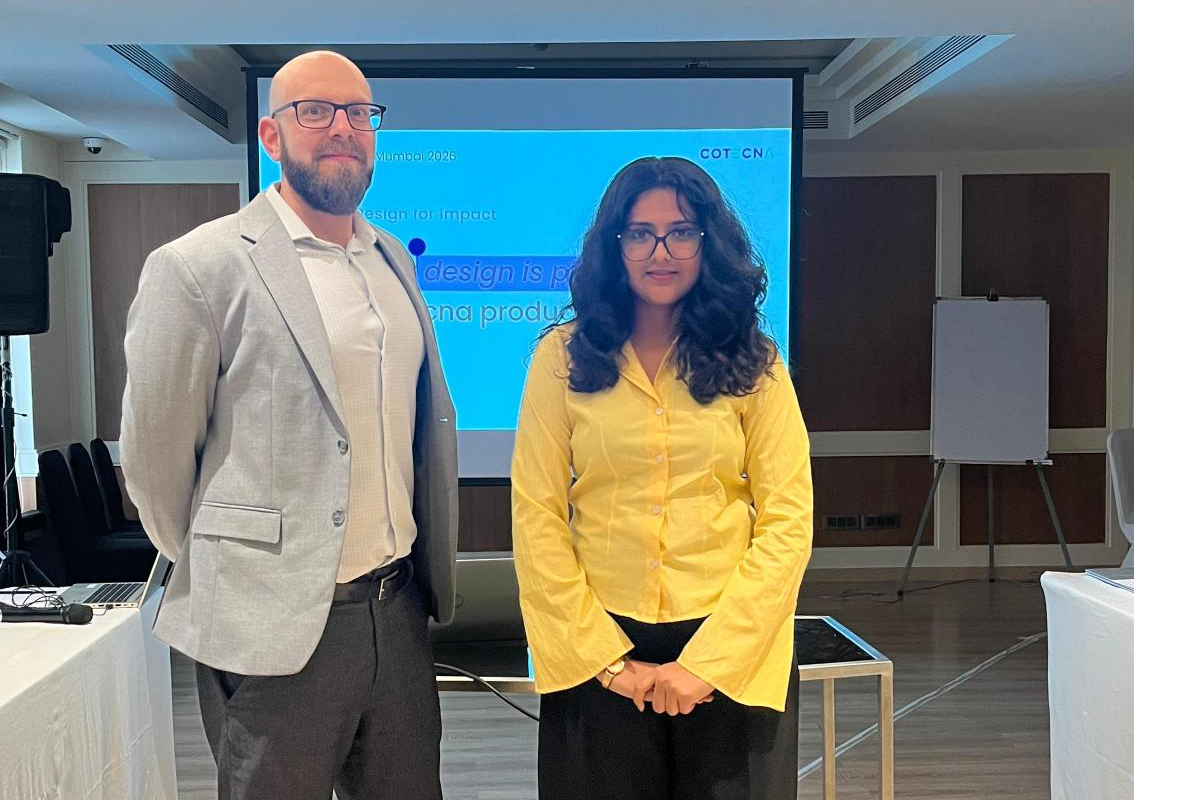
As the product organization grew, from around 40 developers and nine products to 50+ people and 15+ products, design had to grow with it. I ran the full process of hiring our first junior designer, based in India, and mentored her into the way we work. My role was to grow the craft and the practice, not to manage in a formal sense, but to keep design in step with the organization around it.
Learnings and results
The best way to measure my progress and success at Cotecna is to compare my daily work on day one with now. I am now brought into the kick-off of new projects. Design is no longer something requested once requirements are fixed.
The supporting signals point the same way:
- In the team's org chart, I am considered at the same level as software architects and technical leads. That means being involved in decisions and in the key meetings and communications related to the main projects (especially new ones).
- Product Managers involve us from the start, sharing business needs before solutions are shaped.
- Research activities are now common practice in the process, especially qualitative ones (interviews, workshops, etc.).
- Figma prototypes are essential, the instrument used to align and validate functionality with management and operations.
- No front-end development happens without a design as reference, and those same designs are reused in QA.
- The company expanded the design team as it grew, rather than absorbing design back into development, and trusted me with key projects.
The main lesson from these five years has shaped how I work since. Design is most valuable not as a fixed manual, but as a tool that adapts to the context and helps other people do their work better. I found the way to help Cotecna grow over the last 5 years, and now I feel capable of applying the same recipe whenever it is needed.